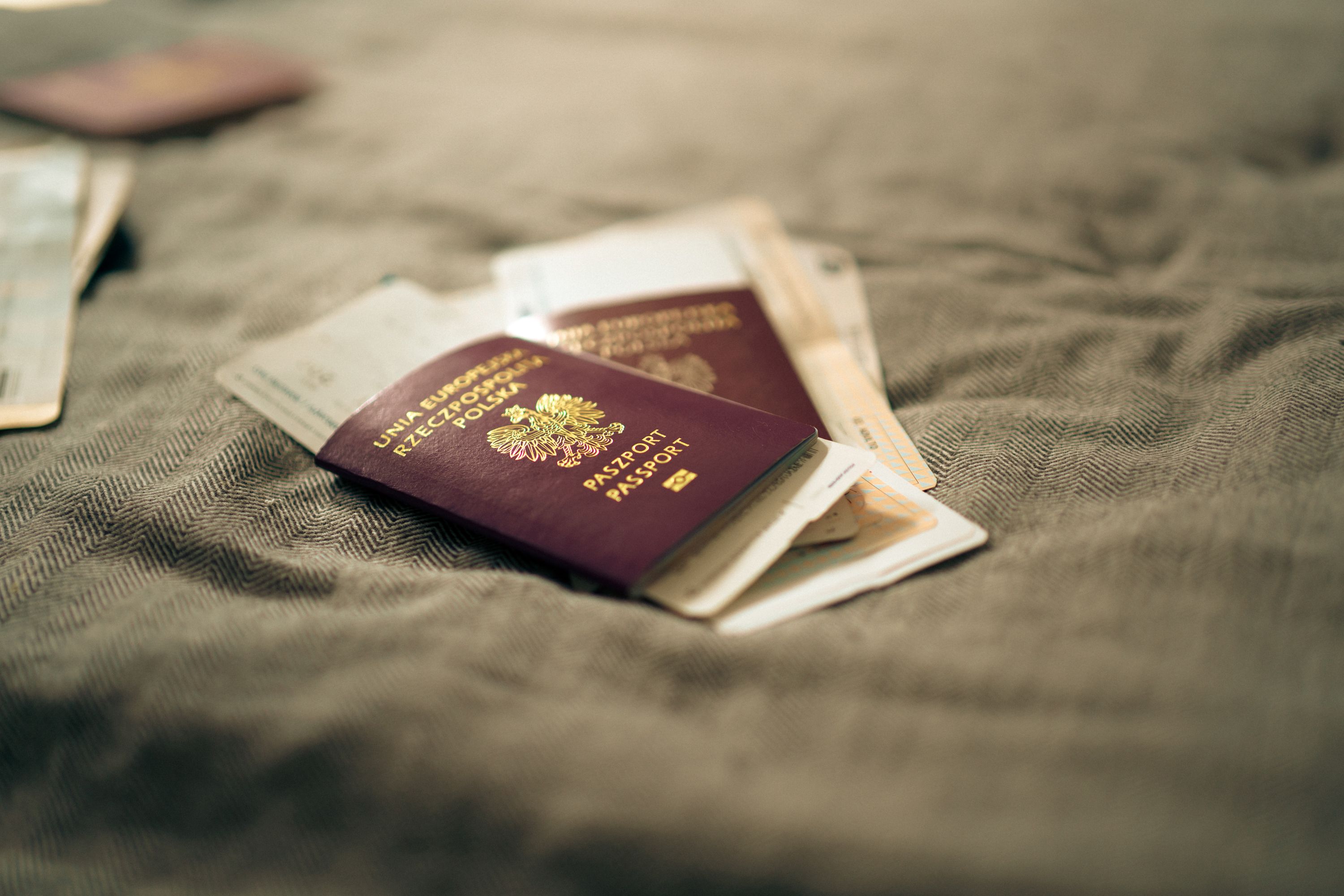
For many Indian-Canadian families, the question isn't whether to bring Mom and Dad over. It's how, and for how long. The Super Visa answers the second part well: one approval can cover up to 10 years of multiple entries, with stays of up to five years each.
It also has more moving parts than a regular visitor visa: an income test, a mandatory insurance policy, a medical exam and an invitation letter. Here's every requirement, what each one costs, and what changed in March 2026.
Key Takeaways
- The Super Visa allows stays of up to 5 years at a time on a visa valid for up to 10 years (IRCC, 2026).
- Insurance must cover at least $100,000 for at least one year, with proof of payment, not a quote.
- IRCC's income table runs from $30,526 (1 person) to $80,784 (7 people), and since March 31, 2026 you can use either of the last two tax years.
- Budget roughly $4,700 for two 70-year-old parents before the medical exam and flights.
Who Qualifies for a Super Visa in 2026?
In 2026, IRCC grants the Super Visa as a multiple-entry visa valid for up to 10 years, with stays of up to five years at a time (Immigration, Refugees and Citizenship Canada, Super visa: Parent and grandparent, updated July 2026). Your parents or grandparents qualify if you're their child or grandchild and a Canadian citizen, permanent resident or registered Indian.
Beyond that relationship, four things must line up. You must meet the minimum necessary income. Your parents need private medical insurance. They must pass an immigration medical exam with an approved panel physician. And they must be admissible, meaning no criminal or health-related bars. You'll also write a letter of invitation that commits you to supporting them financially during the visit.
One misconception is worth clearing up. A Super Visa isn't permanent residence. It's a long-stay visitor visa, so your parents can't work on it, and it doesn't lead to PR by itself. Is that a problem? For many families it isn't, because what they want is time together, not paperwork.
How Much Income Do You Need to Invite Your Parents?
IRCC's minimum necessary income table, last updated July 29, 2025, starts at $30,526 for a household of one and reaches $80,784 for seven, with $8,224 added for each person beyond that (IRCC, Host financial support for a super visa, page details 2026-07-06). Your family size includes you, your spouse and dependent children, and the parents you're inviting.
Many guides label this table as "2026 income requirements." It isn't. The dollar amounts on IRCC's page carry a July 2025 date, and the real 2026 change is about which years of income count, not the amounts. If a site quotes a different figure for a family of four than $56,724, check it against the IRCC page before you rely on it.
Here's a worked example. You, your spouse and two children make four. Add both of your parents and you're at six, so the minimum is $72,560. Invite only one parent and it drops to five people and $64,336. That's an $8,224 difference for a second parent, which is worth knowing if you're deciding whether to apply for both at once or one after the other.
What if you fall short? On March 31, 2026, IRCC changed how it calculates income, and the rules apply to applications already in processing (IRCC, notice on changes to the super visa income requirement, March 20, 2026). Your notice of assessment can now meet the minimum in either of the two tax years before you apply. Or your income in the prior year can be at least 75% of the minimum, with the rest covered by your parents' own income and proof they'll keep earning while in Canada. A co-signer's income counts toward yours.
What Does Super Visa Insurance Require, and What Does It Cost?
Super Visa insurance must provide at least $100,000 in coverage, stay valid for at least one year from the date of entry, and come with proof of payment (IRCC, Super visa: Get your documents). A quote doesn't count. You can pay in full or pay by instalments with a deposit, as long as the paid portion is documented.

There's one point where IRCC's own pages differ. The documents page still says the policy must come from a Canadian insurer. IRCC's 2026 Ministerial Instructions, in force since March 31, 2026, also allow a company outside Canada that the Minister has approved (IRCC, Ministerial Instructions: Super Visa 2026). Until the pages match, a Canadian-insurer policy is the safest choice.
Premiums rise sharply with age. In 2026, PolicyAdvisor's published quotes for $100,000 of coverage over 365 days, with a $1,000 deductible and no pre-existing conditions, were $1,588 at 65, $2,187 at 70 and $2,713 at 75 (PolicyAdvisor, Super Visa insurance quotes). Those are one-person broker estimates, and a higher deductible lowers the premium.
What Does the Whole Super Visa Cost?
IRCC charges $100 per person for the Super Visa and $85 per person for biometrics, so $185 for each parent (IRCC, Super visa: Apply, August 2026). Insurance is the big line item. The exam, translations, courier fees and any professional help come on top.
Put the pieces together for two parents aged 70. Insurance at $2,187 each is $4,374. Government fees at $185 each add $370, for roughly $4,744 before the panel physician's exam fee, translations and flights. IRCC's fee page also lists family caps for people applying together, so confirm whether your parents qualify. This total is our own arithmetic from the sources above, not an IRCC figure.
How Likely Is Approval, and Super Visa or PGP?
In 2023, IRCC received 91,417 Super Visa applications, approved 73,604 (81%), refused 15,754 (17%) and saw 2,059 withdrawn (2%) (IRCC, Report on the super visa income requirement, appeal process and special circumstances). That's the most recent full-year breakdown we could verify. It doesn't split results by country, so we can't say what the India rate was.

Now the PGP question. The Parents and Grandparents Program offers permanent residence, but its target is just 15,000 admissions a year for 2026 to 2028 (IRCC, Supplementary information on the 2026-2028 Immigration Levels Plan). As of March 2026, IRCC said it wasn't accepting new PGP applications. Its July 2025 intake invited 17,860 potential sponsors to receive 10,000 complete applications (IRCC, CIMM briefing on family reunification, March 23, 2026).
Compare that with roughly 52,900 Super Visas issued in 2025, from the same briefing. We wouldn't compare it with the 2023 approval count above, since IRCC measures the two differently. But the contrast is plain enough: the Super Visa is open all year, and the PGP is a lottery most families can't count on. Many families use the Super Visa for years while they wait for a PGP invitation.
How Do You Apply, Step by Step?
Start with the income and insurance pieces, because they take the longest to line up. Then build the file in the order below. A missing document is the most avoidable reason for a refusal.
Check Your Income Against the IRCC Table
Count your household, including the parents you're inviting. Pull your notices of assessment for the last two tax years and see whether either one clears the minimum.
Write the Letter of Invitation
State your relationship, your household size and your commitment to support your parents. A co-signer, such as your spouse, can sign too and add their income.
Buy the Insurance and Keep the Proof of Payment
Compare at least two quotes for the same age, deductible and $100,000 coverage. IRCC needs proof you've paid, so a quote alone won't be accepted.
Book the Medical Exam With a Panel Physician
Your parents need an exam with an IRCC-approved panel physician. Book early, since results must be on file before the visa can be issued.
Submit, Pay Fees and Give Biometrics
Upload the file, pay $100 and $85 per parent, and have biometrics taken. Then track the application and answer any request for more information quickly.
A professional can review the file before you submit. R Watts Immigration Services, supervised by Ritesh Watts, RCIC, lists a professional fee of CAD 500 for the first Visitor Visa or Super Visa applicant and CAD 300 for each additional one. Government and third-party costs are separate, and no outcome is guaranteed. A 30-minute Super Visa consultation costs CAD 70. You can see the full service list at Watts Immigration.
Frequently Asked Questions: Super Visa in 2026
How much income do I need to sponsor my parents on a Super Visa?
It depends on how many people your income must cover. IRCC's table (updated July 29, 2025) runs from $30,526 for one person to $80,784 for seven, plus $8,224 for each extra person. You count yourself, your spouse, your dependent children and the parents you're inviting.
How much does Super Visa insurance cost?
Broker quotes for $100,000 of coverage over one year start around $1,588 for a 65-year-old, $2,187 at 70 and $2,713 at 75 with no pre-existing conditions (PolicyAdvisor). Those are one-person estimates. A couple pays roughly double, and stable pre-existing conditions raise premiums further.
Can my parents get a Super Visa if my income is too low?
Possibly. Since March 31, 2026, IRCC accepts the minimum income in either of the two tax years before you apply. Your co-signer's income can count, and your parents can add their own income to cover any remaining amount if they show they'll keep earning while in Canada.
Is the Super Visa better than the Parents and Grandparents Program (PGP)?
For most families, yes, because it's open year-round. IRCC wasn't accepting new PGP applications as of March 2026 after a July 2025 intake that invited 17,860 sponsors to reach 10,000 applications. The Super Visa is a visit, not permanent residence, so the two serve different goals.
How long can my parents stay in Canada on a Super Visa?
Up to 5 years at a time. The visa itself can be valid for up to 10 years with multiple entries, according to IRCC. Border officers decide the stay length on arrival, and your parents' insurance must remain valid for the time they plan to be here.
The Super Visa is the realistic route for most families who want their parents in Canada for long stretches. Check your income against IRCC's table, price insurance early, and build the document file before you apply. If your income is close to the line, the March 2026 changes may help. For a related path, our guide to Express Entry from India covers permanent residence for you or other family members. Rules and fees change, so confirm every figure on IRCC's site before you submit. This article is general information, not legal or immigration advice.